14th Amendment Center Statement on Supreme Court Ruling in Louisiana v. Callais
The decision is a culmination of the justices’ project, many years in the making, of undermining the Voting Rights Act of 1965 — and with it our multiracial democracy.
14th Amendment Center Staff Apr 29, 2026
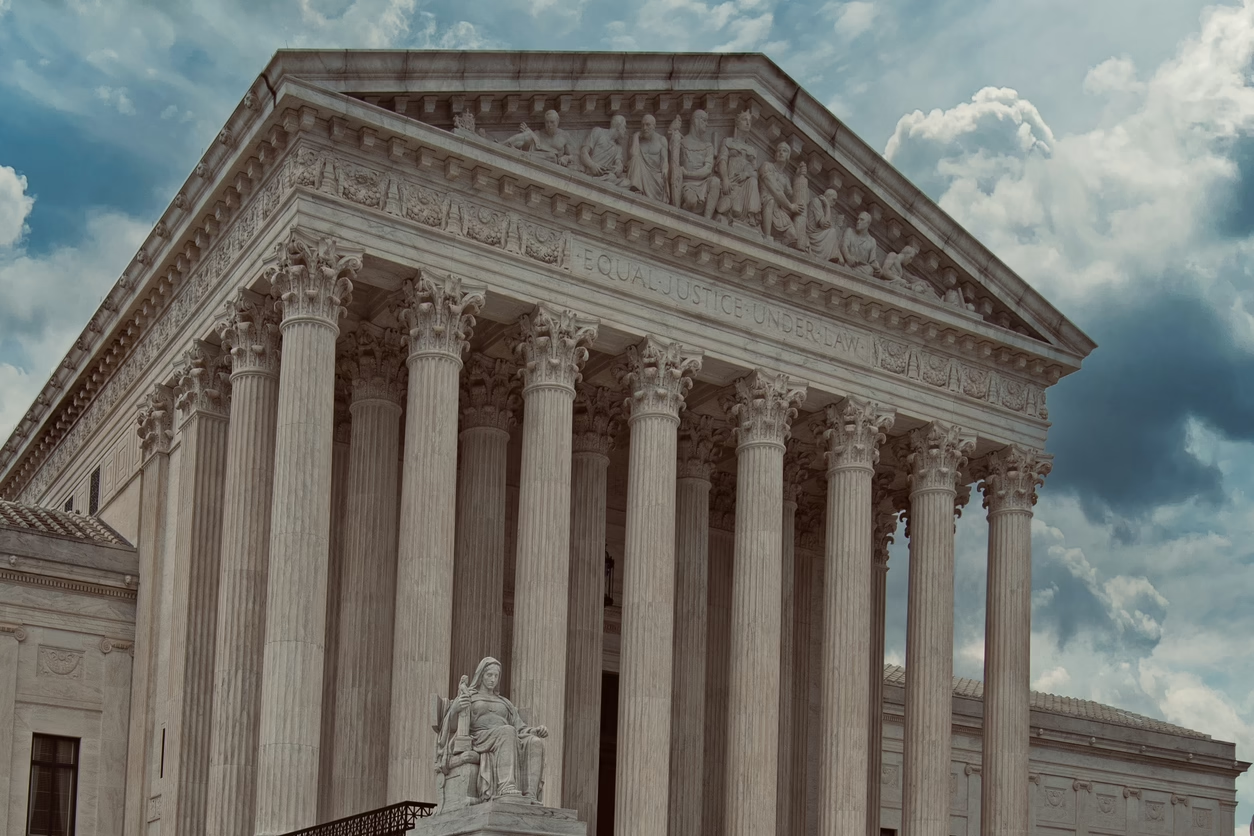
Greggory DiSalvo/iStock
The Supreme Court’s decision today in Louisiana v. Callais carries profound implications for Black political representation and for democracy in this country. The majority has, in essence, amended Section 2 of the Voting Rights — by overturning its earlier precedent in Allen v. Milligan and re-writing the rules for how redistricting plans that minimize Black voting strength are to be evaluated under the Voting Rights Act.
This decision is a follow-on from the Supreme Court’s disastrous 2013 decision in Shelby County v. Holder. In both cases, the Court insists that the “great strides” this country has made “in eliminating racial discrimination in voting” — strides made possible only by the strength of the Voting Rights Act’s protections — justifies weakening the law’s ability to ensure that the voting strength of racial minorities is not diluted.
This decision is also an extension of the Supreme Court’s ahistorical and atextual insistence on a “colorblindness” approach to interpretation of the 14th Amendment, which the Court advanced in the Students for Fair Admissions v. Harvard affirmative action case years ago. To be clear, the drafting and ratification of the 14th and 15th Amendments were the most color-conscious efforts ever undertaken by the United States Congress, in full recognition of the corrosive and destructive power of racism to the promise of democracy in this country. The framers of those amendments well understood the need to directly engage with race in order to overcome its hold on American society.
In sum, the 14th and 15th Amendments to the Constitution were enacted to secure full citizenship, meaningful equality, and access to equal political participation for Black people in our country. One hundred years later, the Voting Rights Act, was forged from the activism, demand, and sacrifices of Black people for whom that promise was still denied. Each time the Act has been reauthorized since then, it has been in recognition of the stubbornness of racial discrimination in the political process, and the need for critical tools to challenge that entrenched reality. By narrowing the scope of the Voting Rights Act and limiting race-conscious remedies, the ruling raises urgent questions about the future of voting rights and representation in the United States.
Today’s ruling underscores a growing tension between the original purpose of the 14th and 15th Amendments — to secure meaningful equality — and the Supreme Court’s current approach, which increasingly limits the tools available to achieve it. It also reflects the conservative majority’s willingness to jettison its own recent precedent in its headlong determination to remake our constitutional order to conform with its ideological viewpoint.
As the full implications of this ruling become clear, the 14th Amendment Center will continue to engage scholars, advocates, and the broader public in examining what this decision means for the future of voting rights, representation, and constitutional equality — and how this and other developments during our current crisis lay bare the urgent need for a new Refounding.