Birthright Citizenship and the Dunning School of Unoriginal Meanings
Three legal scholars explore how a handful of academics have been developing a defense of a presidential order purporting to end birthright citizenship for the children of undocumented immigrants.
14th Amendment Center Staff Mar 16, 2026
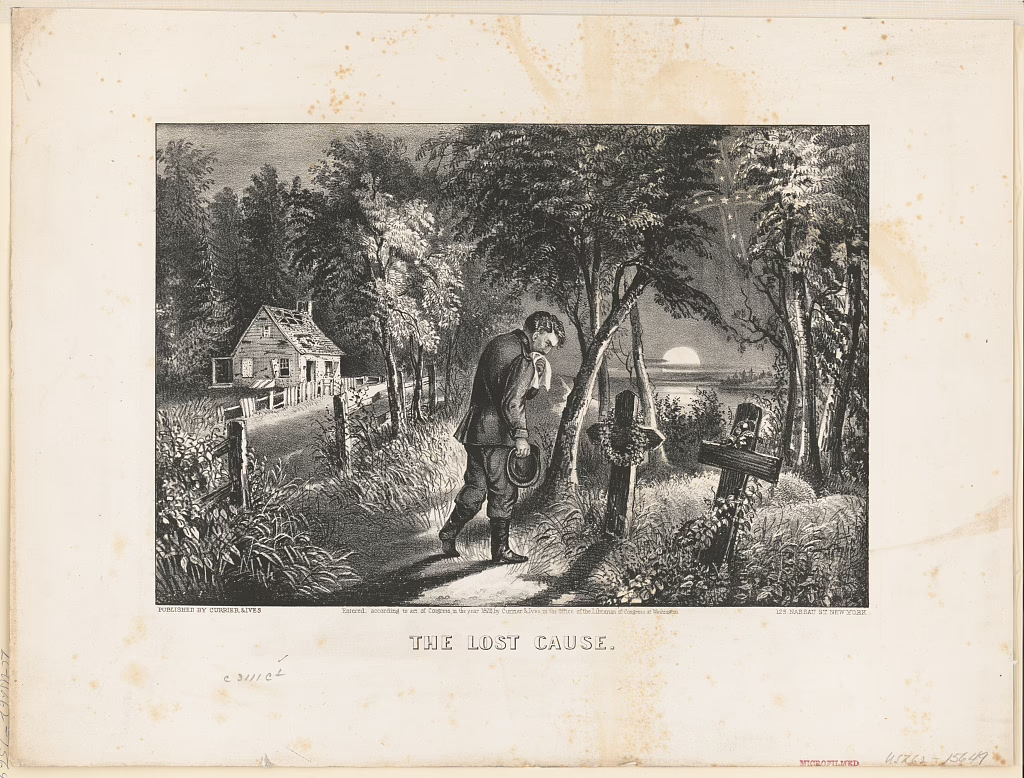
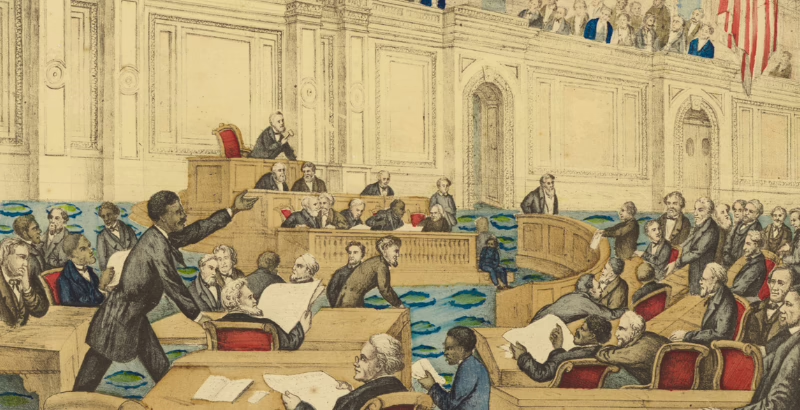
"The lost cause." Currier & Ives. 1872. Library of Congress.
On April 1, 2026, nearly 160 years after Congress passed the 14th Amendment to the United States Constitution, the Supreme Court will hear arguments in Trump v. Barbara, a case that examines whether an executive order President Donald Trump signed on his first day back in office complies with the Citizenship Clause in Section 1 of the amendment.
In this scholarship spotlight, Professors Evan Bernick, Paul Gowder, and Anthony Michael Kreis reintroduce us to an article they co-authored in the wake of that executive order — and the scholarship that has emerged in its wake to justify excluding broad swaths of people born here from the promise of U.S. citizenship enshrined in the 14th Amendment.
* * *
In the year since President Trump’s executive order purporting to end birthright citizenship for children of undocumented immigrants and temporary visitors, a handful of constitutional law professors who have had no prior engagement with the law of citizenship have been building a defense of that order’s alleged constitutionality — and doing so in public, by articulating ever-shifting and ostensibly originalist arguments about the meaning of “under the jurisdiction thereof” in the 14th Amendment. Those arguments, no matter how many times they’re revised, suffer from the same basic flaws: a methodologically bankrupt approach to historical sources, a retrofitting of those sources to a preexisting ideological goal, and a disregard of relevant adjacent areas of law, particularly federal Indian law and immigration law. This Essay criticizes the substance of those arguments’ early iterations and the ethics of producing them as outcome-oriented tools in political debate and litigation rather than the products of a genuine scholarly inquiry.