Frederick Douglass on Citizenship
Celebrating the birthday of one of the most important constitutional thinkers of the 19th century.
14th Amendment Center Staff Feb 14, 2026
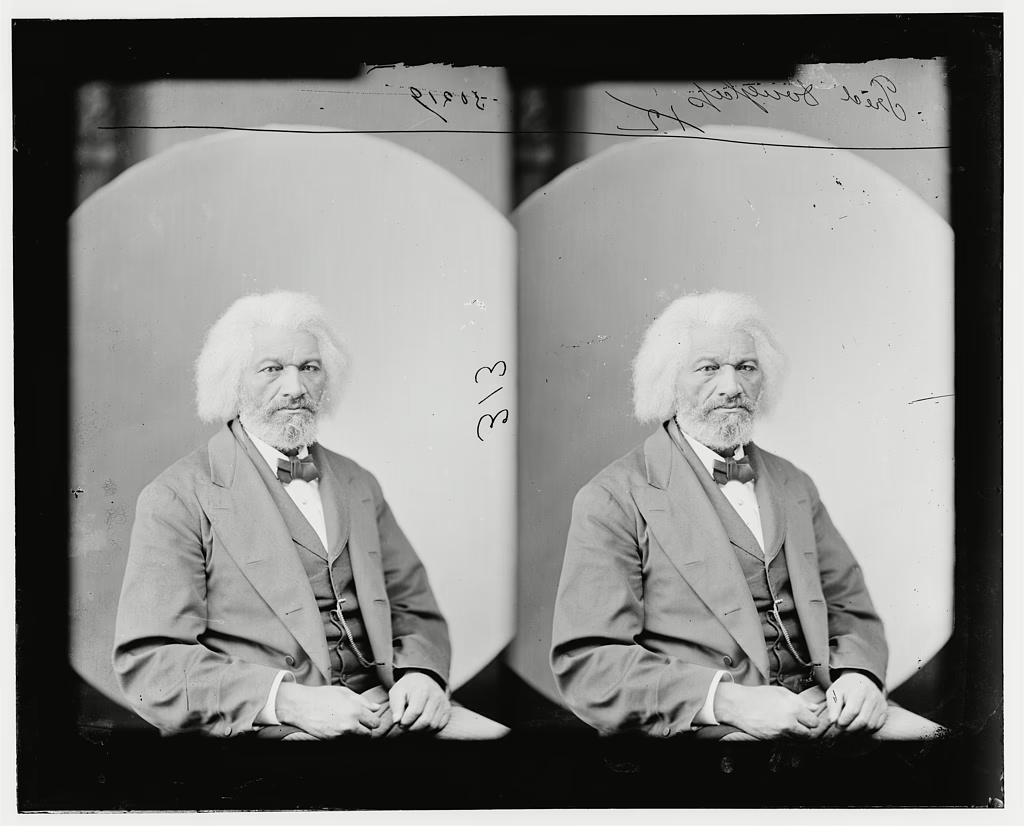
Brady-Handy photograph collection. Library of Congress.
“It has been a source of great annoyance to me, never to have a birthday.”
Frederick Douglass
Abolitionist, writer, and framer of the 14th Amendment
In his autobiographical writings, Frederick Douglass believed he was born in the month of February, and he thought the year was 1818. In My Bondage and My Freedom, Douglass recalled his last meeting with his mother, where she presented him with a cake. “The ‘sweet cake’ my mother gave me was in the shape of a heart, which a rich, dark ring glazed upon the edge of it. I was victorious, and well off for the moment; prouder, on my mother’s knee, than a king upon his throne,” he wrote. Historian Dickson Preston said Douglass later may have speculated that his birthday was somehow connected to Valentine’s Day.
Born into slavery in Maryland, Douglass was legally considered property, not a citizen. Enslaved people were denied legal personhood, political rights, and protection under the Constitution. After escaping slavery in 1838, Douglass spent decades arguing that Black Americans were not outsiders to the nation — they were foundational to it. He rejected the idea that the Constitution was permanently pro-slavery. Instead, he insisted it could be interpreted as a freedom document. Citizenship, for Douglass, was about belonging — but also about legal recognition and enforceable rights.
Portrait of An Activist
Frederick Douglass was the most photographed American of the 19th century, sitting for more than 160 known portraits — more than Abraham Lincoln.
As a formerly enslaved abolitionist, author, and statesman, he deliberately used photography to combat racist caricatures, portraying himself with dignity, serious demeanor, and formal attire to represent Black intelligence and humanity.
“The most photographed American of the 19th century”
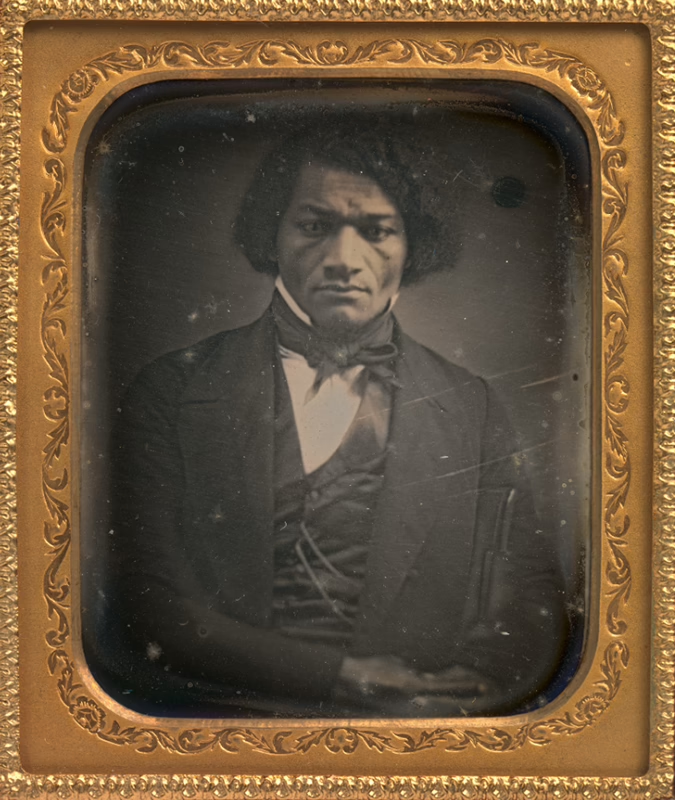
Unidentified photographer. Sixth-plate daguerreotype, c. 1850 (after c. 1847 daguerreotype). National Portrait Gallery, Smithsonian Institution.
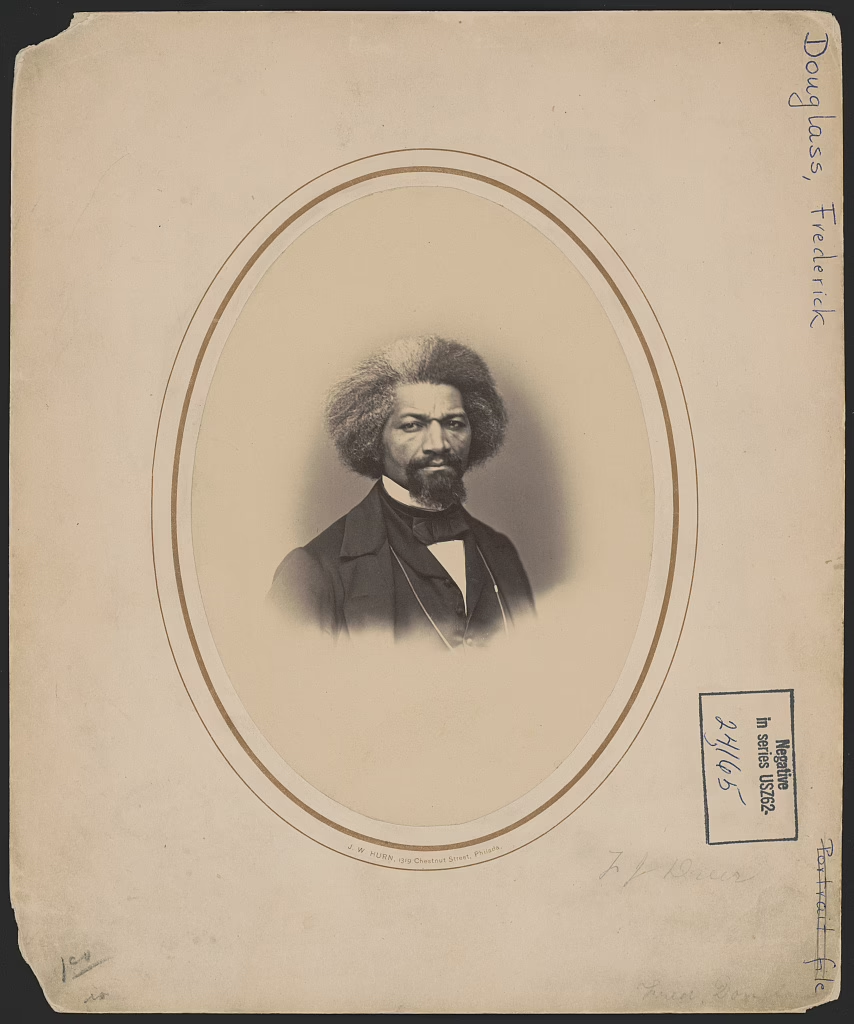
Head-and-shoulders portrait of Frederick Douglass, by photographer John White Hurn. 1862. Library of Congress.
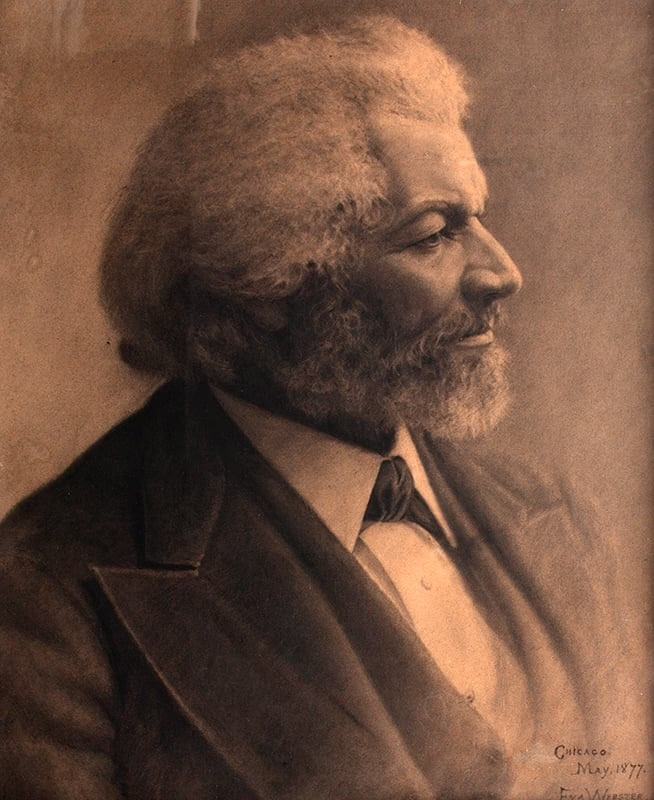
Reproduction of charcoal drawing by Eva Webster Russell. 1877. Photo by Carol M. Highsmith. National Park Service/National Portrait Gallery.
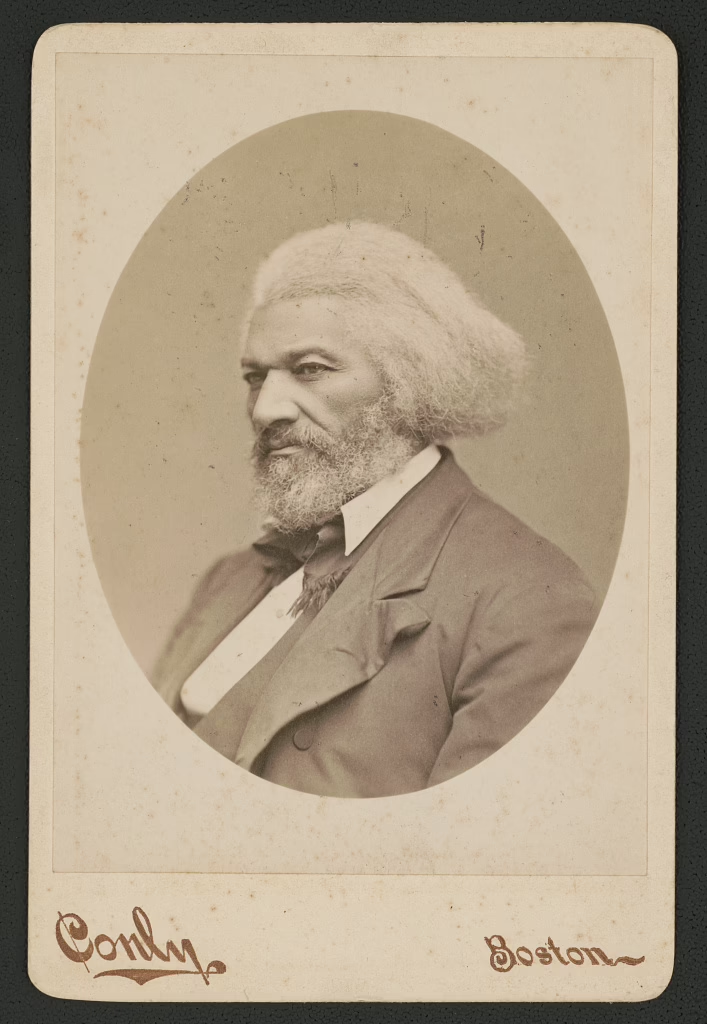
Frederick Douglass, between 1880 and 1890. Photo by George Kendall Warren. Library of Congress.
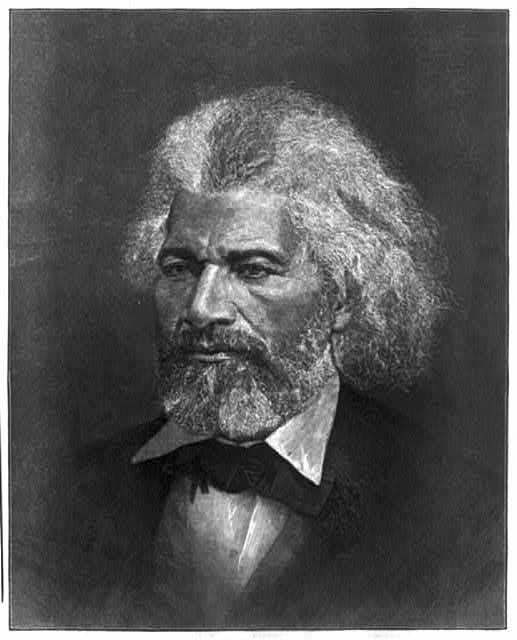
Illustration of Frederick Douglass in Harper's Weekly, 1883. Library of Congress.
“I understand from some things that have occurred since I came in that you have been celebrating my seventy-first birthday. What in the world have you been doing that for? Why Frederick Douglass. That day was taken from him long before he had the means of owning it. Birthdays belong to free institutions. We, at the South, never knew them. We were born at times: harvest times, watermelon times, and generally hard times. I never knew anything about the celebration of a birthday except Washington’s birthday, and it seems a little strange to have mine celebrated. I think it is hardly safe to celebrate any man's birthday while he lives.”
Frederick Douglass
* * *
To learn more about Frederick Douglass’s life and work in images, visit the 14th Amendment Center’s Instagram page.