

Civil Rights Act of 1866
“An Act to protect all Persons in the United States in their Civil Rights, and furnish the Means of their Vindication.”
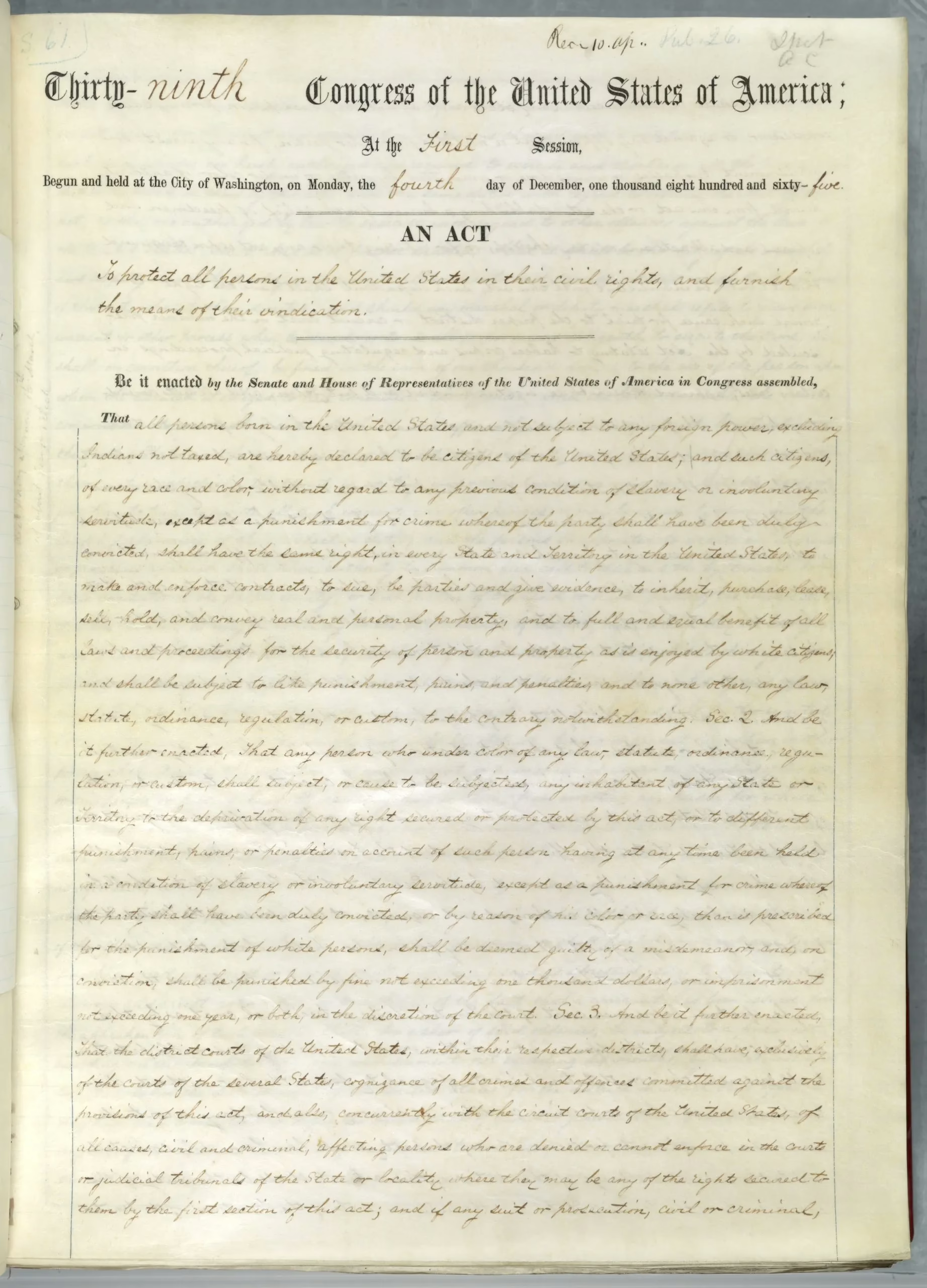
National Archives.
A precursor to the 14th Amendment, the Civil Rights Act of 1866 was Congress’s first attempt at legislation following the abolition of slavery.
Key provisions:
Be it enacted . . . , That all persons born in the United States and not subject to any foreign power, excluding Indians not taxed, are hereby declared to be citizens of the United States; and such citizens, of every race and color, without regard to any previous condition of slavery or involuntary servitude, except as a punishment for crime whereof the party shall have been duly convicted, shall have the same right, in every State and Territory in the United States, to make and enforce contracts, to sue, be parties, and give evidence, to inherit, purchase, lease, sell, hold, and convey real and personal property, and to full and equal benefit of all laws and proceedings for the security of person and property, as is enjoyed by white citizens, and shall be subject to like punishment, pains, and penalties, and to none other, any law, statute, ordinance, regulation, or custom, to the contrary notwithstanding.
Sec. 2. And be it further enacted, That any person who, under color of any law, statute, ordinance, regulation, or custom, shall subject, or cause to be subjected, any inhabitant of any State or Territory to the deprivation of any right secured or protected by this act, or to different punishment, pains, or penalties on account of such person having at any time been held in a condition of slavery or involuntary servitude, except as a punishment for crime whereof the party shall have been duly convicted, or by reason of his color or race, than is prescribed for the punishment of white persons, shall be deemed guilty of a misdemeanor, and, on conviction, shall be punished by fine not exceeding one thousand dollars, or imprisonment not exceeding one year, or both, in the discretion of the court.
Sec. 3. And be it further enacted, That the district courts of the United States, within their respective districts, shall have, exclusively of the courts of the several States, cognizance of all crimes and offences committed against the provisions of this act, and also, concurrently with the circuit courts of the United States, of all causes, civil and criminal, affecting persons who are denied or cannot enforce in the courts or judicial tribunals of the State or locality where they may be any of the rights secured to them by the first section of this act….